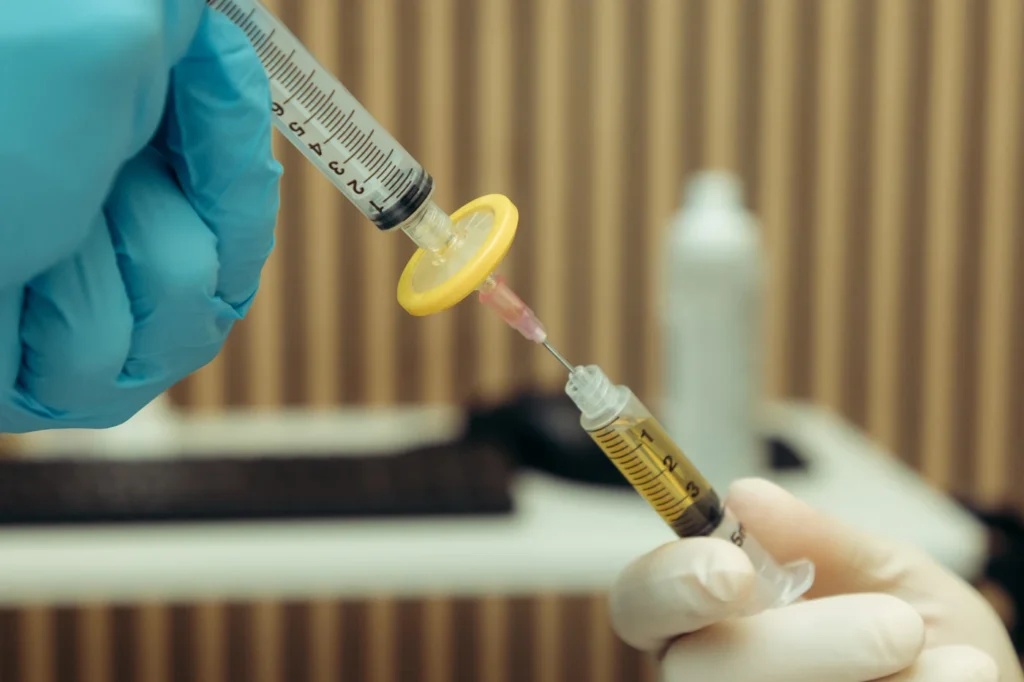


Regenerative stem cell therapy at PHI is performed by board-certified physicians Dr. Faisal Lalani and Dr. Nadiv Samimi at our Beverly Hills practice under image guidance. PHI offers five protocols, spanning autologous cells from your own bone marrow or fat and allogeneic options from screened tissue sources, for orthopedic, spine, and soft-tissue conditions.
How Stem Cell Therapy Works
Stem cell therapy uses regenerative cells to support the body’s natural repair processes. The cells signal damaged tissue to recruit healing factors, modulate inflammation, and in some cases differentiate into the surrounding tissue type.
PHI offers both autologous protocols (cells harvested from your own body) and allogeneic protocols (FDA-registered cells from screened tissue sources). The right protocol depends on your condition, your age, your prior treatment history, and the tissue being targeted.
We use ultrasound and fluoroscopic guidance for every injection to confirm precise placement. Most patients return to normal activities within 48 to 72 hours, with full benefit typically observed at the 3-to-6-month mark.
Stem Cell Therapy Overview
Five Protocol Options at PHI
BMAC (Bone Marrow Aspirate Concentrate)
An autologous procedure using your body’s own cells, harvested from bone marrow (typically the hip or iliac crest) under local anesthesia and reinjected the same day. Indicated for orthopedic conditions in patients under 65 with adequate bone marrow reserves.
Fat-Derived Stem Cells (Adipose MSCs)
Uses your own stem cells harvested from fat tissue, which provides a much higher volume of mesenchymal stem cells than bone marrow. This autologous protocol is indicated for patients seeking high MSC volume and soft-tissue indications, and is often recommended for patients over 60 who may have reduced bone marrow stem cell density.
Wharton’s Jelly
An allogeneic protocol using mesenchymal stem cells sourced from FDA-registered umbilical tissue donors. With no harvesting procedure required, it is a popular option for patients who want to avoid an autologous harvest, have reduced personal stem cell reserves, or need higher cell counts than their own cells can yield.
Multilineage Stem Cell Protocol
A specialized protocol using a rare type of stem cell with an unusual ability to develop into multiple kinds of tissue. This makes it an advanced option when your physician needs flexibility to address damage in more than one area, or when standard stem cell options have not produced enough response.
Acellular Signaling Protocol
A non-cellular preparation containing no live cells, only standardized growth factors and signaling molecules. Classified under FDA Section 361, it is indicated for patients who want regenerative signaling without live cells, have contraindications to cellular therapy, or are seeking a standardized, non-cellular protocol.
Conditions We Treat with Stem Cell Therapy
Stem cell therapy at PHI is used for orthopedic, spine, and soft-tissue conditions, including:
- Knee osteoarthritis and cartilage damage
- Hip osteoarthritis and labral tears
- Shoulder arthritis and rotator cuff disease
- Tendon injuries (Achilles, patellar, rotator cuff, lateral epicondyle)
- Ligament injuries
- Degenerative disc disease
- Sacroiliac joint dysfunction
- Chronic post-surgical joint pain
If your condition is not listed, your physician will tell you whether stem cell therapy is appropriate during consultation. Some conditions are better treated with PRP, A2M, exosomes, or interventional pain procedures.
Why Patients Choose PHI for Stem Cell Therapy
A regenerative injection, not surgery
PHI performs stem cell therapy in-clinic at our Beverly Hills practice, delivered as an image-guided injection under direct physician oversight with sterile technique. It is a regenerative injection, not a surgical procedure, so there is no operating room and no extended recovery.
Two board-certified physicians
Treatment is administered by Dr. Faisal Lalani or Dr. Nadiv Samimi, both board-certified in interventional pain. You meet your physician at consultation and the same physician performs your procedure.
Five protocol options under one roof
Most practices offer one or two stem cell protocols. PHI offers five, allowing your physician to match the protocol to your specific condition rather than fitting your condition to a limited menu.
Concierge model
Single-physician continuity from consultation through follow-up, with direct access to your physician during recovery. International patients receive coordinated travel and treatment scheduling.
Concierge, coordinated care
Single-physician continuity from consultation through treatment and return to activity. Patients receive clear guidance and transparent pricing at consultation.
Your Stem Cell Therapy Process at PHI
Consultation
A 60-minute physician consultation including review of imaging, physical exam, treatment history, and a discussion of which of the five protocols fits your condition. You leave with a recommended protocol, expected timeline, and a clear price.
Pre-procedure visit
A brief planning visit, usually within 1 to 2 weeks of consultation. Imaging is reviewed, the harvest site (if applicable) is identified, and day-of instructions are provided.
Procedure day
Procedures are performed at our Beverly Hills practice under local anesthesia and image guidance. Most appointments take 60 to 120 minutes total, and you leave the same day.
Recovery
Most patients return to normal activities within 48 to 72 hours. Activity modifications vary by procedure and target tissue, and your physician will provide specific recovery guidance.
Follow-up
Follow-up visits at 6 weeks, 3 months, and 6 months to monitor response. Most patients report meaningful improvement at 3 months, with continued progression through 6 months and beyond.
Frequently Asked Questions
Stem cell therapies vary in FDA classification depending on protocol. Autologous treatments (BMAC, fat-derived) using minimal manipulation are not classified as drugs under FDA Section 361. Allogeneic protocols use FDA-registered tissue sources. Your physician will explain the regulatory classification of any protocol they recommend.
Insurance coverage and payment options may vary. We provide documentation for you to seek reimbursement through your out-of-network benefits, which may apply to certain services. All pricing is disclosed at consultation.
PRP is generally appropriate for early-stage tendon, ligament, and mild joint conditions. Stem cell therapy is typically used for more advanced cartilage damage, degenerative joint disease, and conditions where PRP has been tried without sufficient response. Your physician will recommend the right starting point based on your imaging and symptoms.
For many patients with moderate joint disease, stem cell therapy is a meaningful option to explore before surgical intervention. Joint replacement is irreversible; stem cell therapy is not. Patients with severe end-stage arthritis may still ultimately need surgery, but many delay or avoid it through regenerative protocols. Your physician will give you an honest assessment for your stage of disease.
In-clinic at our Beverly Hills practice, performed by your physician under image guidance with sterile technique. Stem cell therapy is a regenerative injection and does not require a surgical facility. For interventional procedures that do, PHI is affiliated with an outpatient surgical suite.
Most patients report meaningful improvement at the 3-month mark, with continued progression through 6 months. Some report earlier symptom changes. Stem cell therapy supports a biological repair process, which takes time, and your physician will set specific expectations based on your protocol and condition.
Yes. PHI regularly treats patients from outside Los Angeles, including Las Vegas, Palm Springs, London, and other international locations. Travel coordination, treatment sequencing, and follow-up logistics are handled by our concierge team.