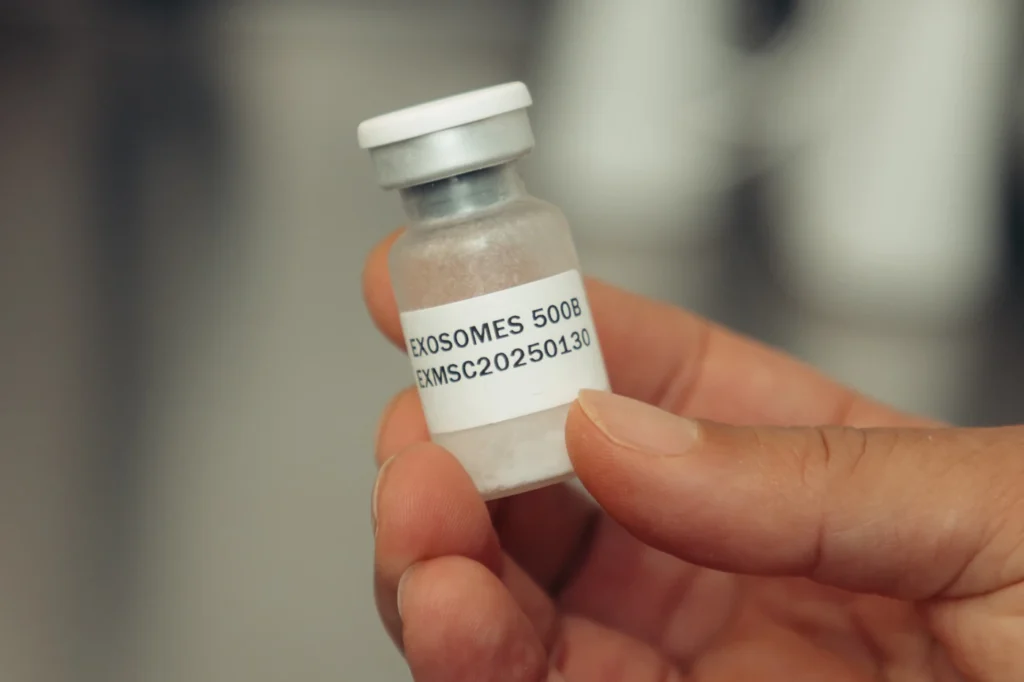


Exosome therapy is a regenerative treatment that uses exosomes, tiny cell-signaling vesicles that carry growth factors and instructions for tissue repair, injected under image guidance to support healing in arthritic joints, injured tendons, and the spine. Exosomes are used within comprehensive regenerative protocols, often alongside PRP or A2M. PHI is honest that the evidence base is still developing.
The Newest Regenerative Option, Framed Honestly
Exosome therapy is the newest of the regenerative treatments PHI offers, and it is also the one surrounded by the most marketing noise. Across the industry, exosomes are frequently sold with claims that outrun the science. PHI takes a different approach: we use exosomes where the rationale is sound, within broader regenerative protocols, and we tell patients plainly what the current evidence does and does not support.
Exosomes are not a miracle therapy, and they are not a standalone cure for joint or spine problems. What they are is a promising tool that may enhance the body’s own repair signaling, most useful as one component of a comprehensive regenerative plan rather than a treatment chosen in isolation.
What Exosomes Actually Are
Exosomes are extracellular vesicles, tiny membrane-bound packages released by cells. Their job in the body is communication: they carry growth factors, proteins, and genetic signaling material from one cell to another, effectively delivering instructions that influence how nearby cells behave.
In regenerative medicine, the interest in exosomes comes from this signaling role. Rather than introducing new cells, as in stem cell therapy, exosome preparations aim to deliver the signaling molecules that may prompt the body’s existing cells to reduce inflammation and support tissue repair. It is a different mechanism than PRP (which concentrates your own platelets and their growth factors) or A2M (which neutralizes cartilage-destroying enzymes), and PHI matches the approach to the patient rather than defaulting to one therapy for everyone.
Where Exosomes Fit at PHI
PHI uses exosome therapy for musculoskeletal regeneration, joints affected by arthritis, injured or degenerating tendons, and spine-related conditions. This is orthopedic and regenerative use, not cosmetic. PHI does not offer exosome facials or aesthetic skin treatments.
Exosomes are typically considered within a comprehensive regenerative protocol rather than as a first or only step. For many patients, PRP or A2M carries a stronger evidence base and is the more appropriate starting point. Exosomes may be discussed for patients pursuing comprehensive regenerative care, those who have not responded fully to other options, or as part of a staged approach over time. Your physician will be direct about whether exosomes add meaningful value to your specific situation.
An Honest Word on the Evidence
PHI believes patients deserve the real picture. The clinical evidence for exosome therapy in musculoskeletal conditions is early and still developing. Laboratory and preliminary studies are encouraging, and the mechanistic rationale is reasonable, but large, high-quality human trials are limited compared with more established options like PRP.
There is also a regulatory dimension worth understanding. Exosome products exist in an evolving regulatory landscape, and quality varies significantly between sources. PHI uses screened, quality-controlled preparations and is transparent about sourcing during consultation. We are equally transparent that we cannot promise outcomes, and we are wary of any provider who does.
For patients who want a regenerative option with a more mature evidence base, we will say so and point toward PRP or A2M. For patients pursuing comprehensive regenerative care who understand the developing nature of the evidence, exosomes may be a reasonable part of the plan.
How PHI Approaches Exosome Therapy
The first step is a comprehensive evaluation: a detailed history of your condition, examination of the affected joint, tendon, or spinal region, review of imaging, and an honest discussion of whether regenerative medicine in general, and exosomes in particular, fit your situation.
If exosome therapy is appropriate, treatment involves an image-guided injection placed precisely at the target site, performed by a board-certified physician. As with other regenerative treatments, effects are not immediate. Most patients are evaluated over a period of weeks to months, and exosomes are often combined with or sequenced alongside PRP, A2M, or other elements of a regenerative plan.
When to Consider Exosome Therapy
You may be a candidate for a regenerative consultation that includes exosome therapy if you have joint, tendon, or spine pain that has not responded fully to conservative care, if you are exploring regenerative options and want an honest assessment of where exosomes fit, if you are pursuing comprehensive regenerative care, or if you want to understand all the tools available before deciding on a plan.
You are typically better served by another starting point if you have an acute injury that needs standard evaluation first, if you are seeking a guaranteed outcome (no regenerative therapy offers that), or if a more established option like PRP is the better-evidenced fit for your specific condition.
Why PHI for Exosome Therapy
PHI’s approach to exosomes reflects its broader regenerative philosophy: match the therapy to the evidence, place it within a comprehensive plan, and tell patients the truth about what to expect. Board-certified physicians perform every injection under image guidance, exosomes are considered alongside the full regenerative toolkit rather than sold as a standalone fix, and the conversation about evidence is candid rather than promotional.
Frequently Asked Questions
No. Stem cell therapy introduces cells; exosome therapy delivers the signaling vesicles that cells use to communicate. Exosomes do not contain cells themselves. The two are related areas of regenerative medicine but work through different mechanisms, and your physician will explain which, if either, fits your situation.
There is no reliable evidence that exosomes regrow significant cartilage or fully heal established injuries, and PHI will not claim otherwise. The realistic goal is supporting the body’s repair signaling and reducing inflammation as part of a broader plan, not regeneration of lost tissue.
It is early. Preliminary research and mechanistic rationale are encouraging, but high-quality human trials are limited compared with PRP. PHI is honest that exosomes are the least-established of its regenerative options, which is exactly why we use them within comprehensive protocols rather than as a default.
The regulatory landscape for exosome products is evolving and product quality varies between sources. PHI uses screened, quality-controlled preparations and discusses sourcing transparently during consultation.
Not necessarily. For many conditions, PRP or A2M has a stronger evidence base and is the more appropriate choice. Your physician will recommend the option, or combination, that best fits your specific condition rather than steering you toward the newest therapy.
This depends on your condition and the overall regenerative plan. Exosomes are often used alongside or in sequence with other regenerative treatments, and your physician will outline a realistic course at consultation rather than committing you to a fixed package upfront.
Insurance coverage and payment options may vary. We provide documentation for you to seek reimbursement through your out-of-network benefits, which may apply to certain services. All pricing is disclosed at consultation.
Schedule Your Regenerative Consultation
A 60-minute consultation will evaluate your condition, walk through which regenerative options fit your situation, and give you an honest assessment of where exosome therapy does and does not make sense. Call (310) 856-9488 or book online now.