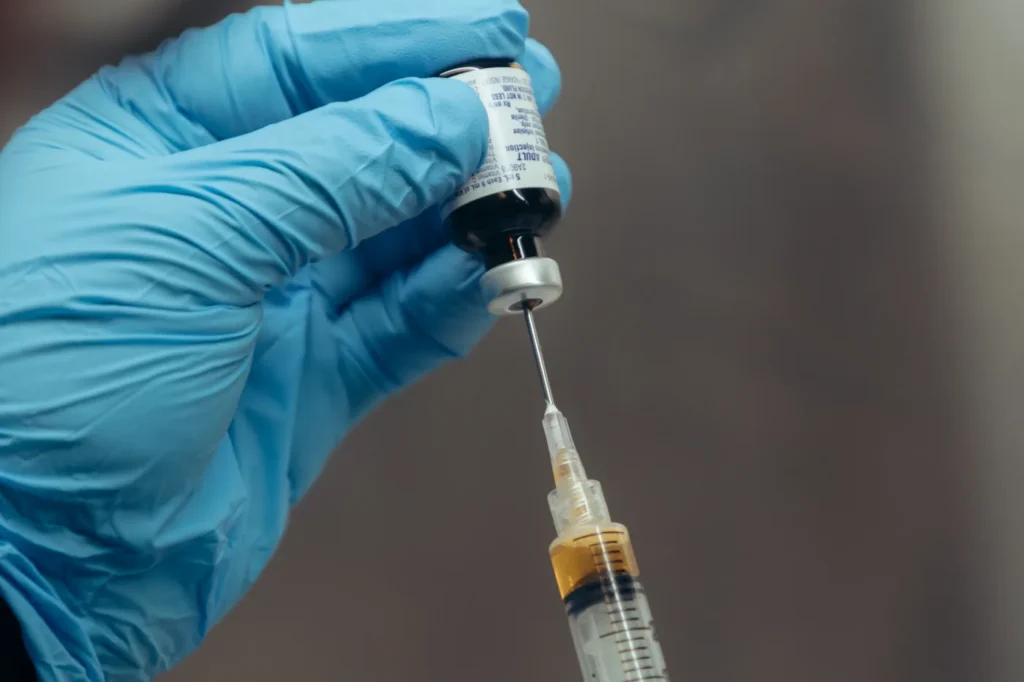


Peptide therapy at PHI is physician-prescribed and patient-specific, following a full medical workup with board-certified physicians Dr. Faisal Lalani and Dr. Nadiv Samimi at our Beverly Hills practice. Protocols span longevity and healthy aging, recovery and tissue repair, and metabolic support, using short amino-acid signaling molecules matched to a confirmed biological need.
What Peptides Are
Peptides are short chains of amino acids, the same building blocks that make up the proteins in your body. Insulin is a peptide; so is oxytocin. Your body produces thousands of them naturally, each one a signal telling specific cells what to do.
Therapeutic peptides are precise versions of these natural signals. Some are identical copies of peptides your body already makes; others are slightly modified to last longer or work more selectively. They work by activating specific receptors rather than overriding your body’s systems, which is why peptides are often described as working with your biology rather than against it.
This is also why peptide therapy is highly individual. The right peptide depends on what biological signal needs to be reinforced or restored, which varies by age, goals, and the underlying issue.
How PHI Approaches Peptide Therapy
Peptide therapy at PHI starts with a full medical workup, including bloodwork. We do not prescribe peptides without first establishing a baseline of your current health. The workup tells us what is actually happening at the biological level (hormone levels, inflammatory markers, metabolic function) and what protocol, if any, fits for you.
Some peptides are FDA-approved medications with decades of clinical data; others are compounded by licensed pharmacies under physician prescription, supported by emerging evidence but not yet FDA-approved for the specific use. Your physician will explain the regulatory status of any peptide they recommend, what the evidence supports, and what it does not.
This honesty is the point. Peptide therapy works when it is matched correctly to a real biological need. It does not work as a generic wellness-optimization prescription. We treat it as medicine, not lifestyle.
Three Areas We Treat with Peptide Therapy
Longevity and healthy aging
As you age, the natural production of certain signaling peptides declines, contributing to slower recovery, changes in body composition, reduced sleep quality, and the visible signs of aging. Peptides used in this area work by gently prompting your body to produce growth hormone at more youthful levels, rather than introducing synthetic growth hormone directly. This preserves your body’s natural feedback loops and avoids the side effects associated with growth hormone replacement. Patients typically report better sleep, faster recovery, and gradual changes in body composition over 8 to 12 weeks.
Recovery, tissue repair, and performance
For patients with persistent injuries, post-surgical recovery, or training demands that exceed natural recovery capacity, certain peptides support the body’s tissue-repair processes. Patients typically report faster resolution of soft-tissue injuries, reduced post-training soreness, and improved healing after orthopedic procedures. The strongest evidence for these peptides comes from preclinical models and clinical experience; large-scale randomized human trials are still limited, and patients who pursue these protocols are choosing to act on emerging evidence under physician supervision.
Metabolic support
Peptides used for metabolic support are matched to your bloodwork and goals. As with every PHI protocol, your physician will explain what a given peptide is intended to do, the regulatory status, and what the evidence supports before any prescription.
Conditions We Treat with Peptide Therapy
- Age-related decline in growth hormone, energy, sleep quality, and recovery
- Muscle preservation and body-composition support
- Persistent soft-tissue injuries (tendons, ligaments)
- Post-surgical recovery
- Athletic performance and recovery demands
- Immune system support
- Skin and tissue regeneration
If your goal is not listed, your physician will tell you whether peptides are an appropriate option during consultation.
Why Patients Choose PHI for Peptide Therapy
Bloodwork-first protocols
PHI does not prescribe peptides without baseline lab work. We measure what is actually happening before recommending any intervention, which is uncommon in a wellness peptide market where many providers prescribe on symptoms alone or skip the workup entirely.
Physician-prescribed
Your peptide protocol is prescribed by Dr. Faisal Lalani or Dr. Nadiv Samimi, both board-certified in interventional pain management with backgrounds in regenerative and wellness medicine. Not a nurse practitioner, not a telehealth questionnaire.
Honest regulatory framing
Some peptides we prescribe are FDA-approved; others are compounded under prescription based on emerging evidence. We tell you which is which, what the evidence supports, and what it does not, so you make an informed decision.
Integrated with the full practice
Peptide therapy fits within a broader concierge relationship. If your bloodwork suggests a different path, we tell you. If recovery from a regenerative procedure could be supported by a peptide protocol, we coordinate it.
Concierge, coordinated care
Single-physician continuity from consultation through treatment and return to activity. Patients receive clear guidance and transparent pricing at consultation.
Your Peptide Therapy Process at PHI
Consultation and bloodwork
A 60-minute physician consultation including a full medical and lifestyle history, a goal-setting conversation, and an order for baseline lab work, performed at PHI or a partner facility depending on what is needed.
Protocol recommendation
Once your labs return, your physician reviews them with you and recommends a specific protocol, including dosing, duration, and what to expect. You leave with a complete plan and a clear price.
Prescription and administration
Your peptides are prescribed through a partner compounding pharmacy or a standard pharmacy depending on the medication, and administration instructions are provided at this stage.
Monitoring
Most protocols include follow-up bloodwork at 8 to 12 weeks to confirm the protocol is producing the expected biological response and to adjust if needed. This is what separates physician-supervised peptide therapy from over-the-counter or research-grade use.
Ongoing plan
Some protocols are time-limited, such as a 12-week recovery cycle; others are ongoing with periodic adjustments. Your physician will set clear expectations for your specific protocol.
Frequently Asked Questions
Some are; others are not. Certain peptides are FDA-approved prescription medications, while many used in longevity and recovery protocols are compounded through licensed pharmacies under specific regulatory pathways rather than being FDA-approved. Your physician will explain the regulatory status of any peptide they recommend.
The safety profile depends on the specific peptide, your individual health, and how it is prescribed. FDA-approved peptides have well-documented safety profiles from large clinical trials; compounded peptides have less large-scale human safety data, though many have been used clinically for years with favorable real-world experience. PHI prescribes peptides only after baseline bloodwork and only with ongoing monitoring, and screens for contraindications during consultation.
This varies by peptide and protocol. Growth hormone-releasing peptides typically take 8 to 12 weeks to produce noticeable changes in sleep, recovery, and body composition. Recovery peptides for soft-tissue injuries often show improvement within 4 to 8 weeks.
Yes, like any medication. Growth hormone-releasing peptides can cause water retention or mild fatigue at the start of a protocol. Each peptide has its own profile, and your physician will review the relevant side effects for any protocol they recommend.
Peptides sold online without a prescription are typically labeled “for research use only” and are not regulated for human use, and quality, purity, and dosing accuracy vary widely. Self-administering also means no baseline labs, no contraindication screening, and no adjustment if your body responds unexpectedly. The cost savings rarely outweigh the risks.
PHI is out-of-network with all insurance plans, a concierge model choice so that clinical judgment dictates your care rather than coverage decisions. Compounded peptides typically are not covered by insurance.
Pricing varies by protocol and depends on the consultation, lab work, and ongoing peptide costs. All costs are disclosed at consultation, with no hidden fees.
Yes. PHI regularly treats patients from outside Los Angeles, including Las Vegas, Palm Springs, London, and other international locations. For peptide protocols, we coordinate the consultation, lab work, and ongoing prescription logistics to fit your travel and home schedule.